Entre azul y buenas noches
Koik Contemporary, Mexico City, December-January 2025 (group exhibition)
Andy Allen-Olivar, Tuva Björk, Rasmus Richter, Olga Krüssenberg
Curated by Lester Aguirre & Eugenia Ledezma. The exhibition was made with support of the Swedish Arts Grants Committee.
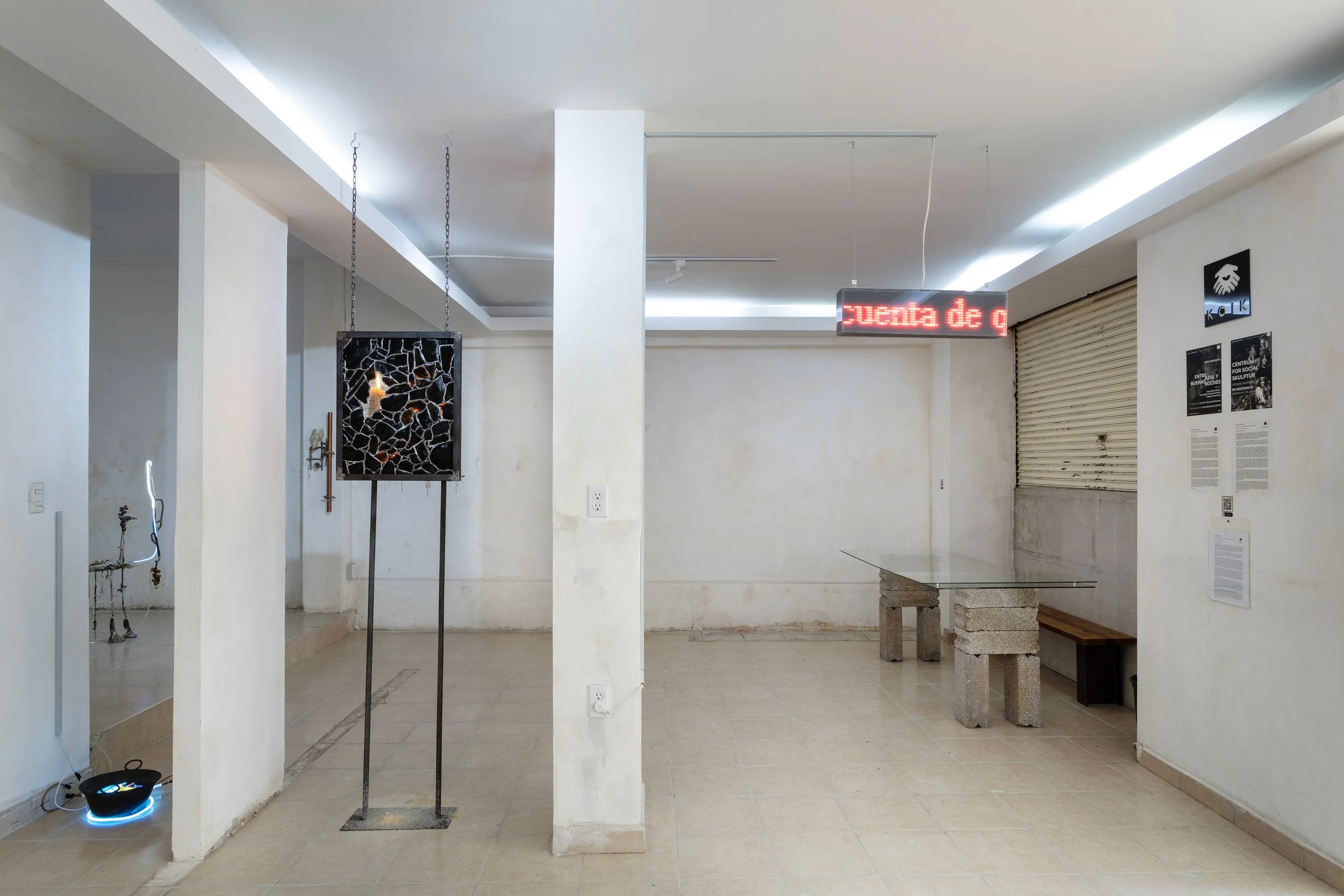
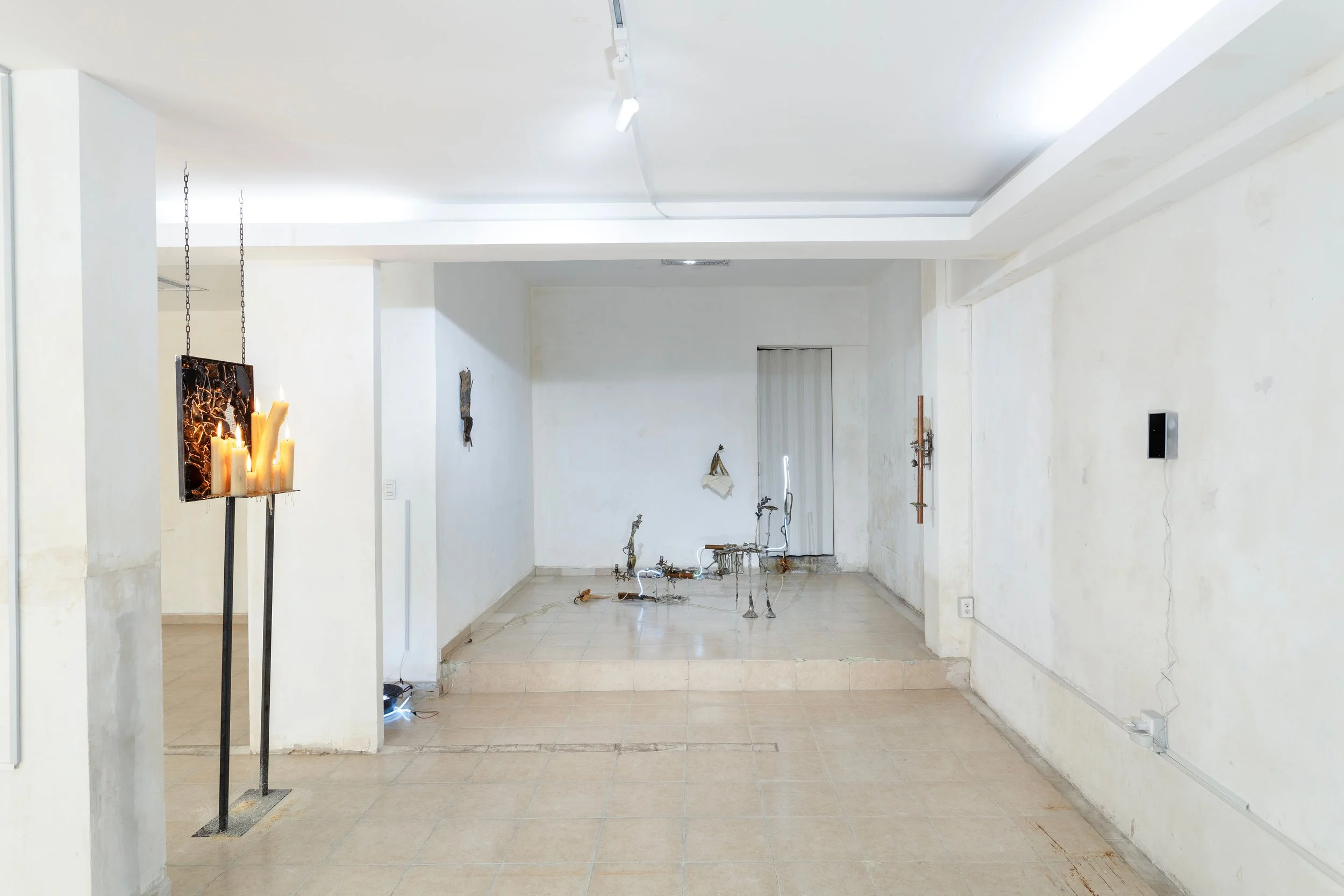
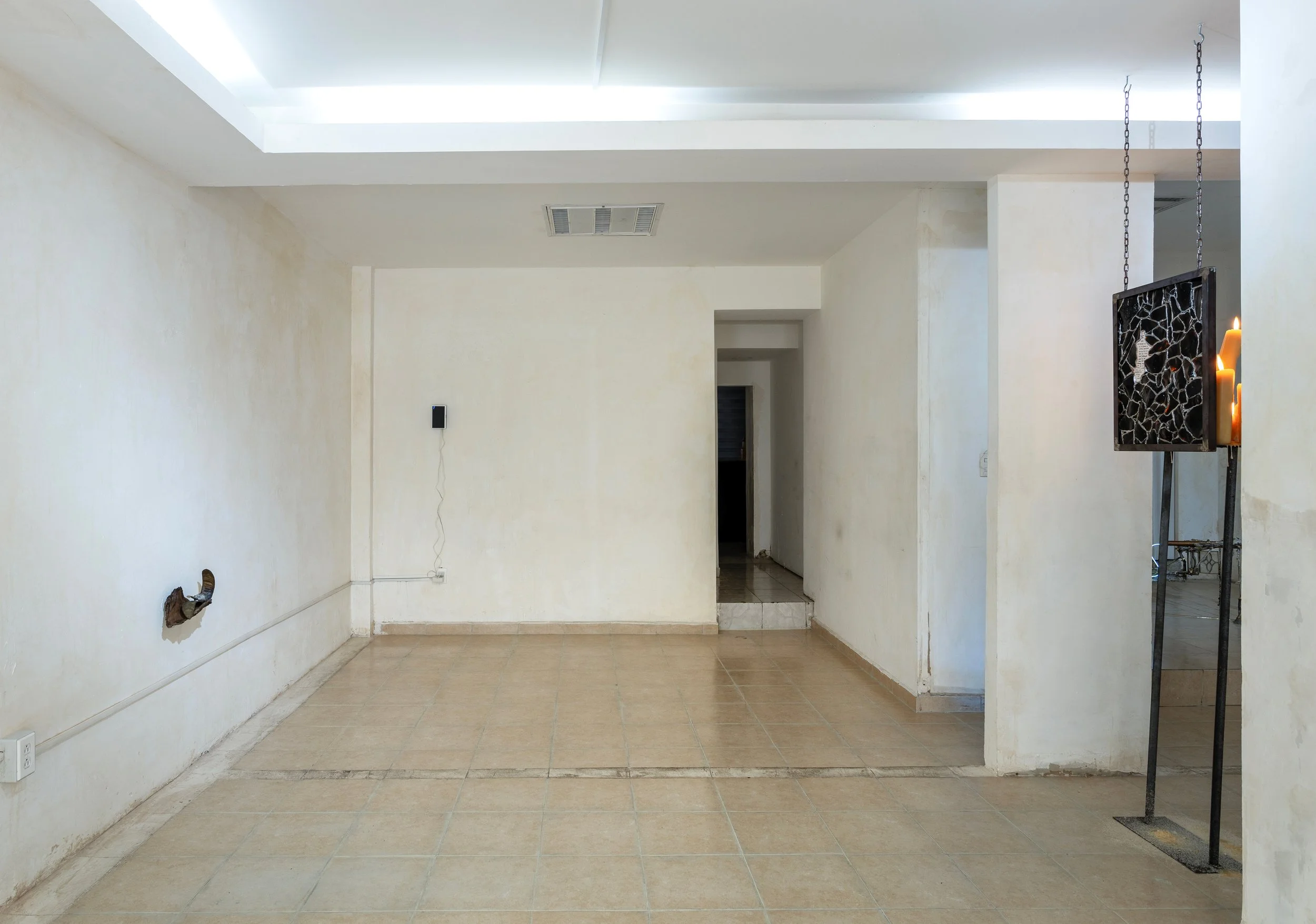
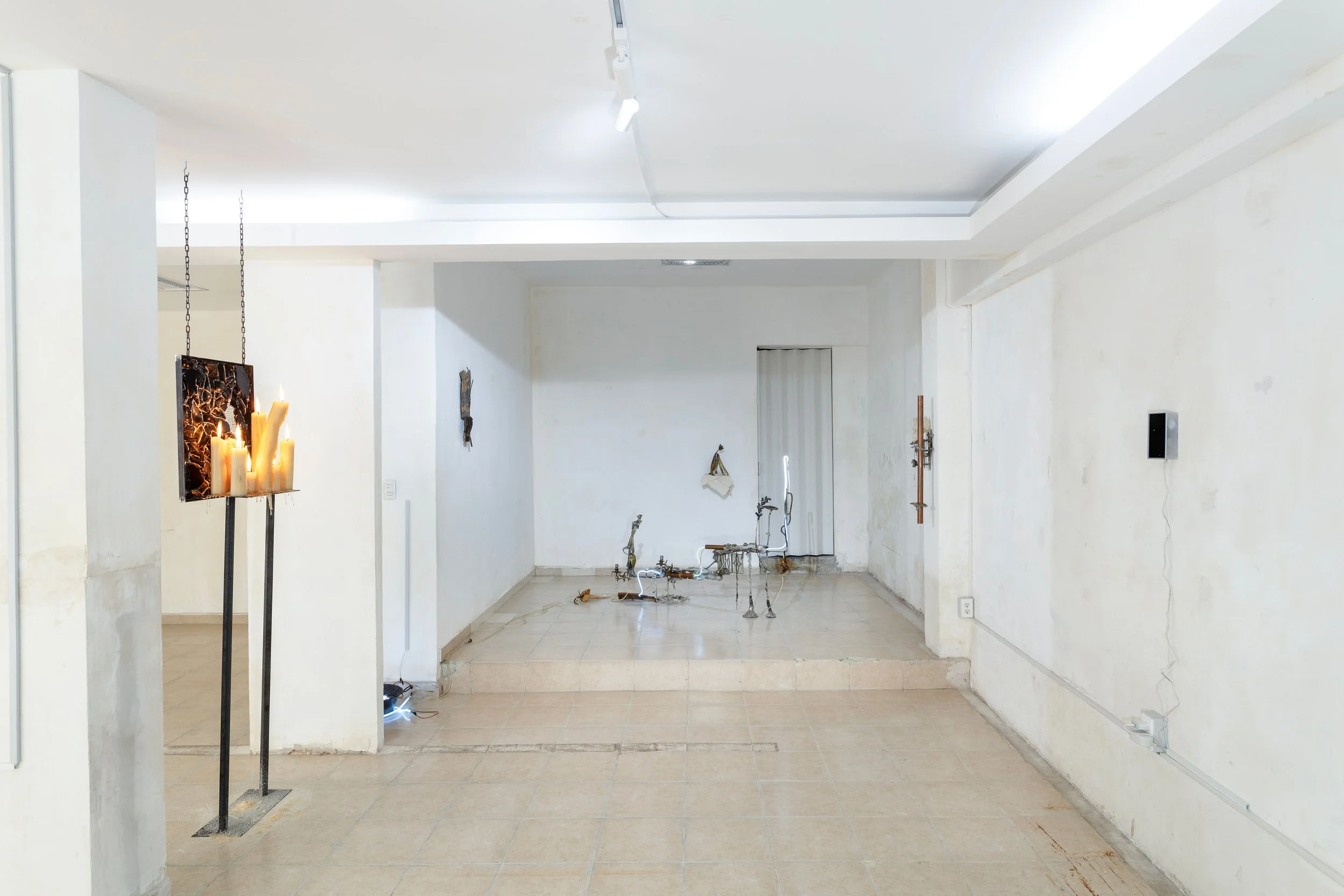
Installation view. Photos: Rubén Garay
Installation view. Photos: Rubén Garay
When a ____ meets a ____
Centrum för Social Skulptur
Between the extremes of the day, the works of Andy Allen-Olivar, Tuva Björk, Rasmus Richter, and Olga Krüssenberg—members of the Social Sculpture Collective—propose a search halfway between understanding the structures that determine our everyday lives and observing the patient path of survival of beings and things, evident in their crossings and fractures. This is not about assuming a relationship of cause and effect, but rather about committing thought to the collective: an artistic discipline linked to the scientific one, a double ascending spiral through the DNA of social architecture.
Their work seems to emerge from a startled gaze or from pinched skin, for different reasons in each case—whether due to the nature of the object, its relationship to others, its muteness, or its anachronism. Apparent surprise—that is, cutaneous surprise—reveals an inner call, an uninterrupted pulse between what is observed and the observer, magnetized by a mutual and uncertain attraction.
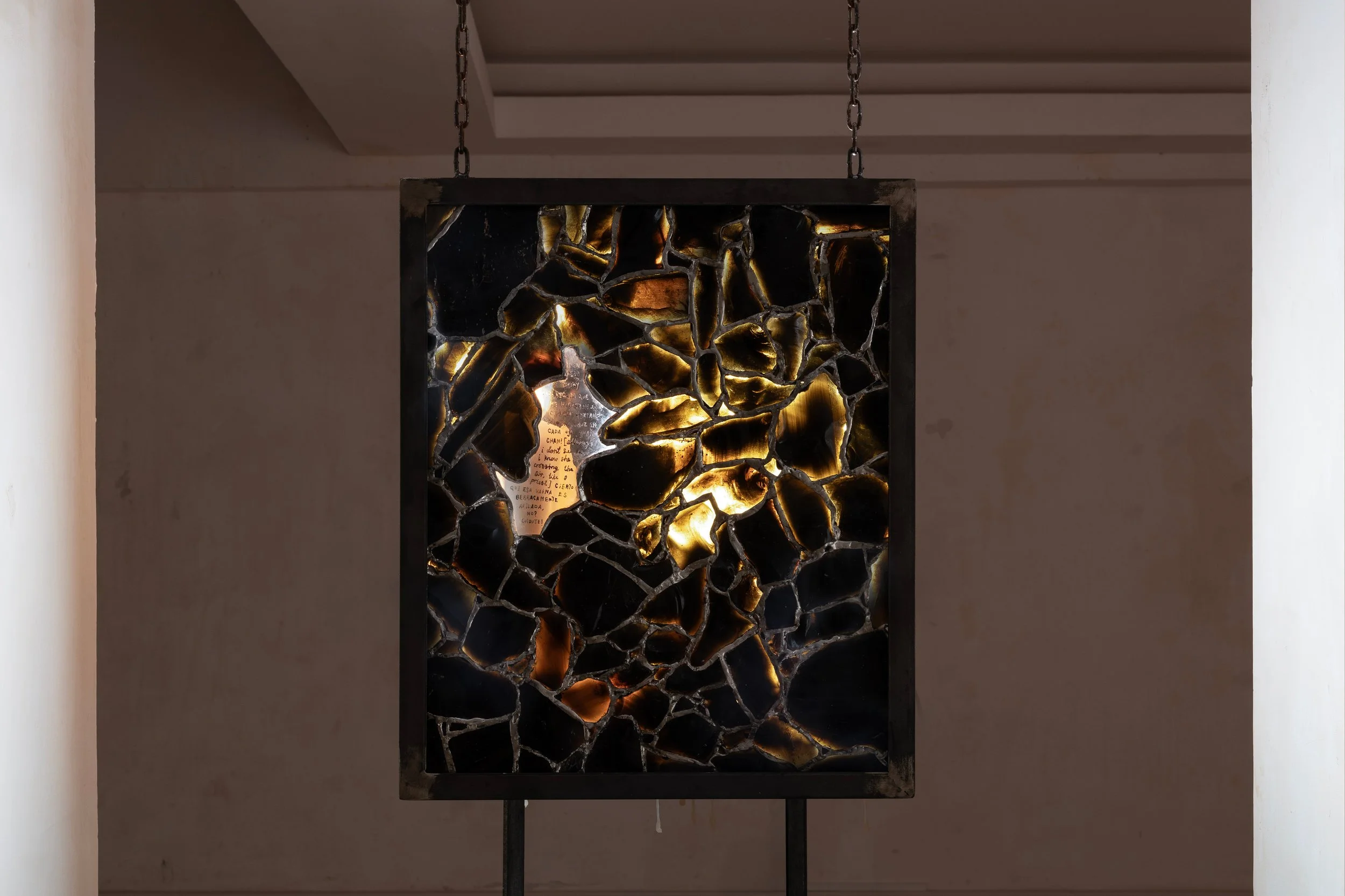
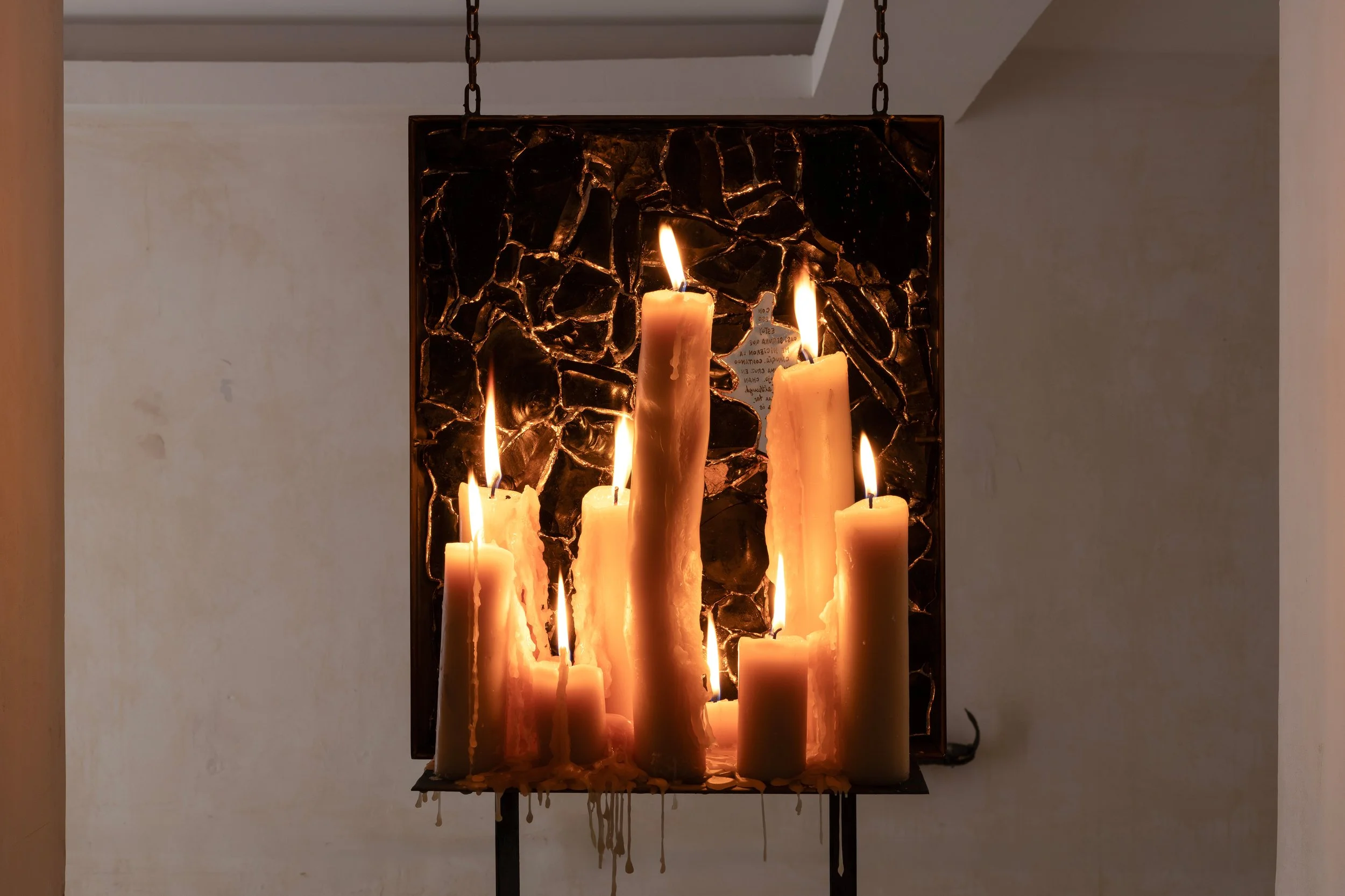
As an example, obsidian. Thanks to its chemical structure, obsidian symbolized cyclical time within Mesoamerican cultures: the coexistence of times. Since it is not a mineral but a glass born from volcanic magma, obsidian reflected images and its transparency revealed the essence of people—both attributes of Huitzilopochtli, “the smoking mirror,” embodiment of the nocturnal sky, god of providence, who possesses the faculty of being everywhere and understanding all human affairs. Part of these ideas reemerge in the work of Andy Allen-Olivar (Bogotá, 1995): a set of irregular obsidian pieces that, before being assembled as a stained-glass window, were collected following the artistʼs research around taxonomy and his way of folding, flattening, or crushing his objects of study in order to examine them.
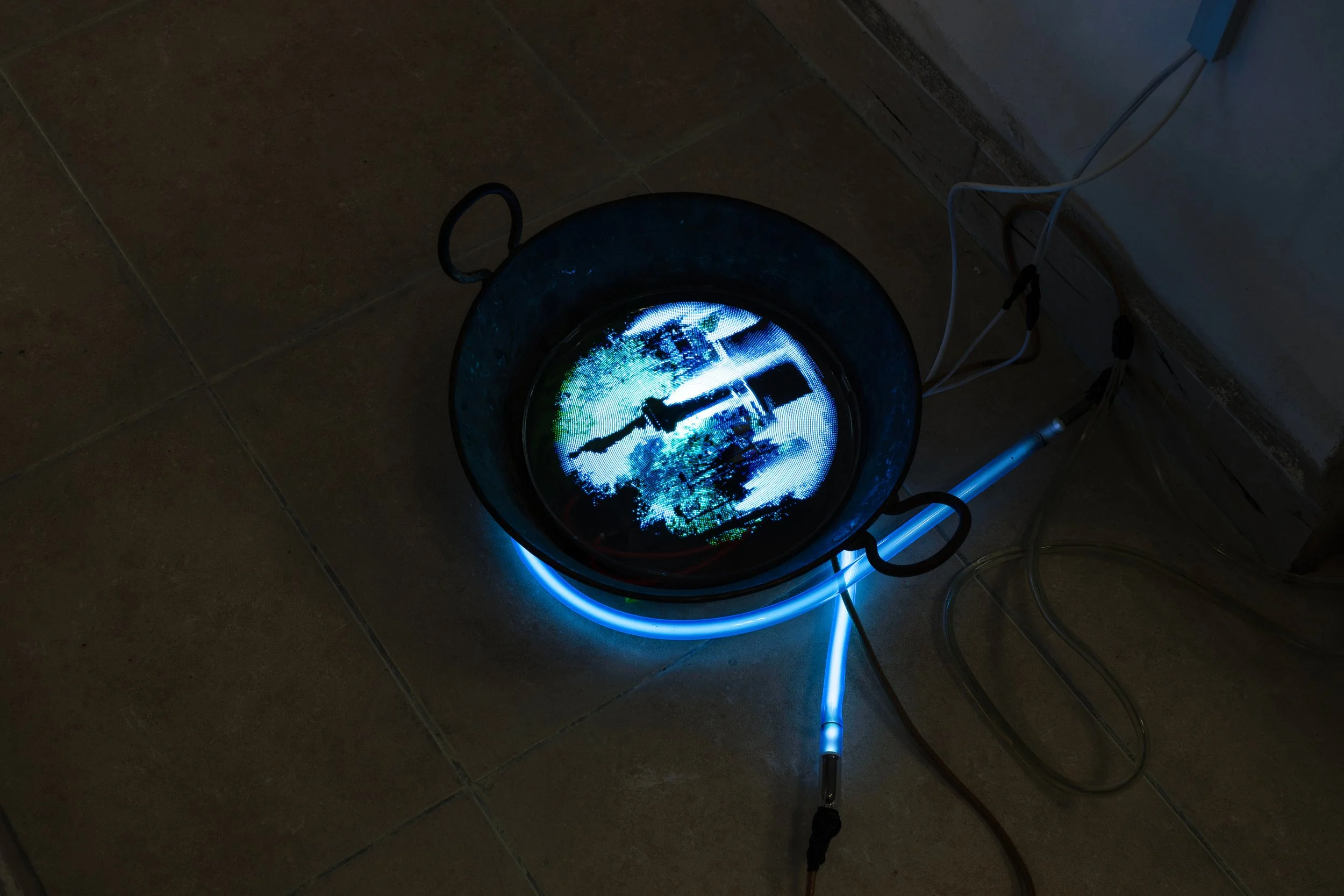
Likewise, water: once a maritime current; at another time, rainfall; piped through cities; carried in jugs and bottled for drinking—water has become a tool for structuring and shaping our societies, or more precisely, a mechanism of subordination to the capitals that control its distribution. Tuva Björk (Helsinki, 1994) documents some of the water cycles in Mexico City: the source is no longer a well or a spring, but a pump used for mopping floors and washing clothes, or a man who, floor by floor, carries several water jugs up and down on his back. The hologram, as the sight and thought of fish and axolotls behind a fish tank, projects this life of water as if it were the memory of a world lost to water scarcity, or merely the prophetic wind that precedes the rains.
In this dialogue, Olga Krüssenberg (Stockholm, 1995) binds experience to encounter, containing the flow of creation within the vessel of fortune—a form of life that conditions the mechanism of composition, holding the encounter in suspense. Two encounters, in this case: the encounter with eagles flying elliptically over the skies of La Marquesa, and the encounter with a man who sells spoons in La Lagunilla. The circular narration of an image split into three and of an illuminated sign captures these crossings. From these temporal knots, sensations seem to run in the opposite direction: image, sound, and their reading appear to return to their origin, while the world, driven by the hours, moves forward as usual. “The wind returns to remember the things that come after,” Olga summarizes.
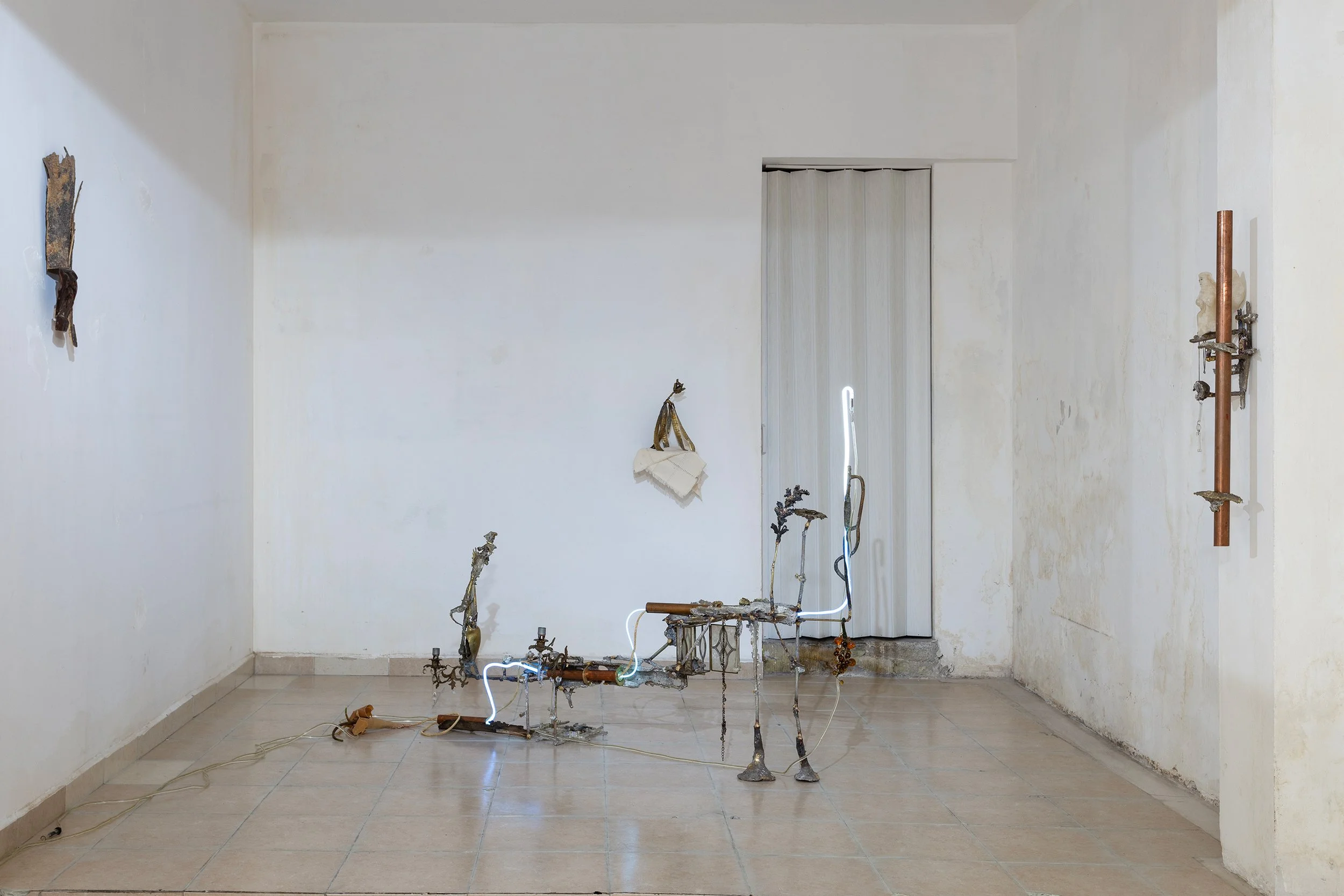
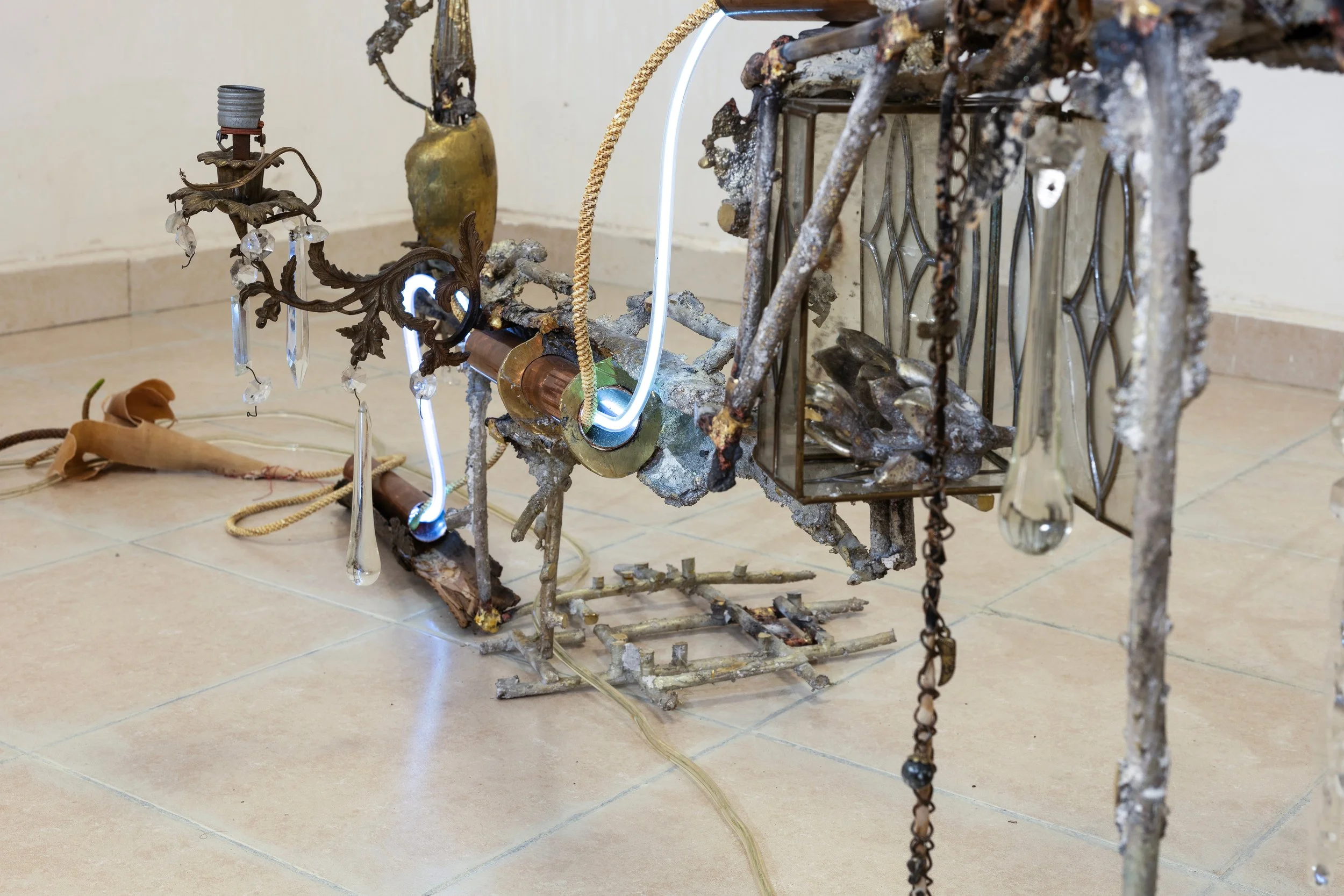
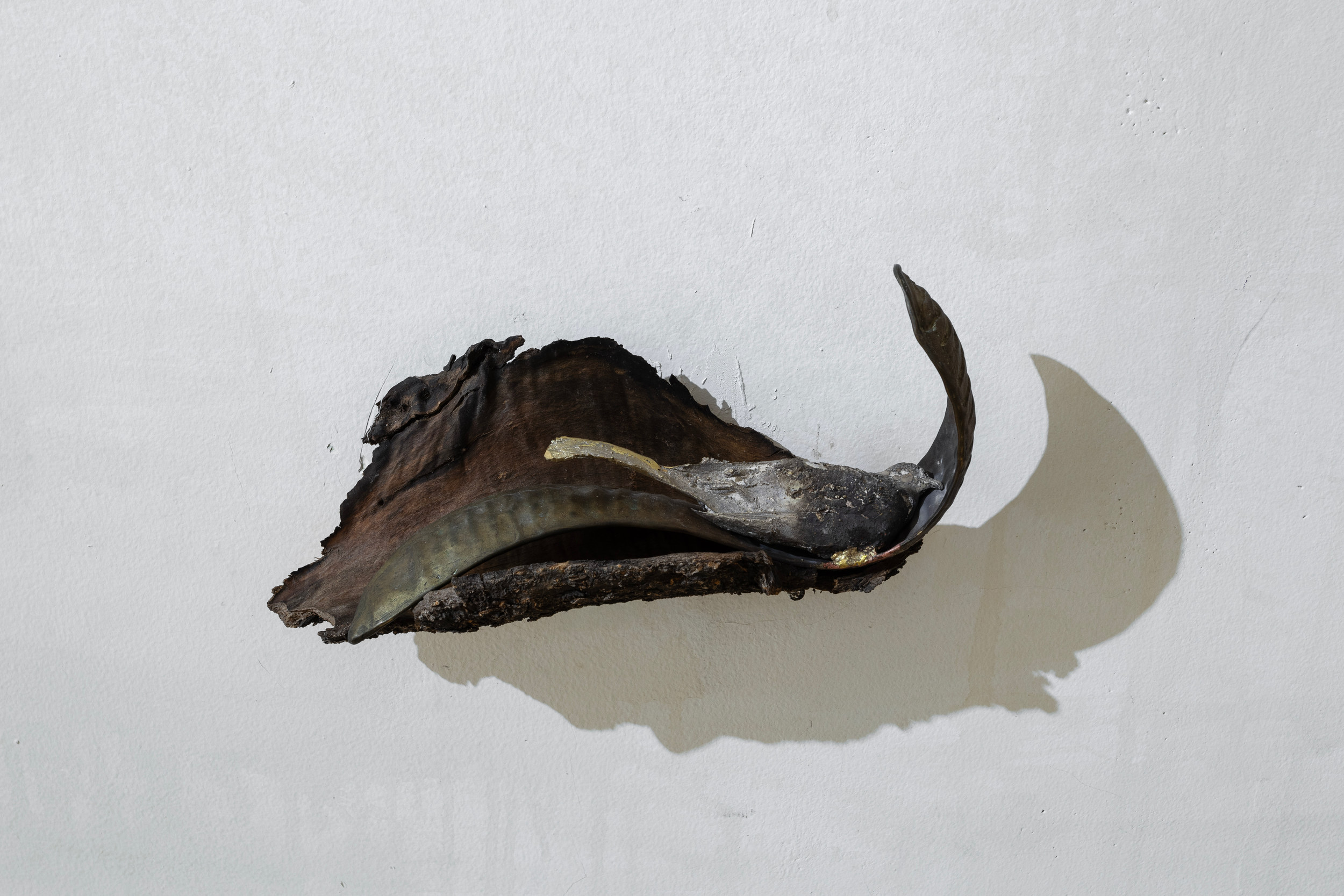
On the other side, roots can be heard constantly breaking sidewalks and pavement—a work-in-progress portrait or a super-slow film for the pedestrians of this city, aware that years ago the street was not like this and that in the future the cracks and roots will continue to grow. In his sculptures, Rasmus Richter (Stockholm, 1997) reflects on a future prefigured by the constant adjustment, readjustment, or misalignment between things and beings, whose survival depends on dissonance with the past project in the face of a possible harmony in the future. An assembly of spirals, branches, and leaves-organic forms in metal and light—warns us that consonances and correspondences rescue us from nothingness.
Text by Juan López
19°19’27.00”N, 99°25’44.63”W
Three-channel video, HD, 1:54 min, loop, monitor, acrylic glass, 15,5 cm x 8,7 cm x 4 cm, 2025
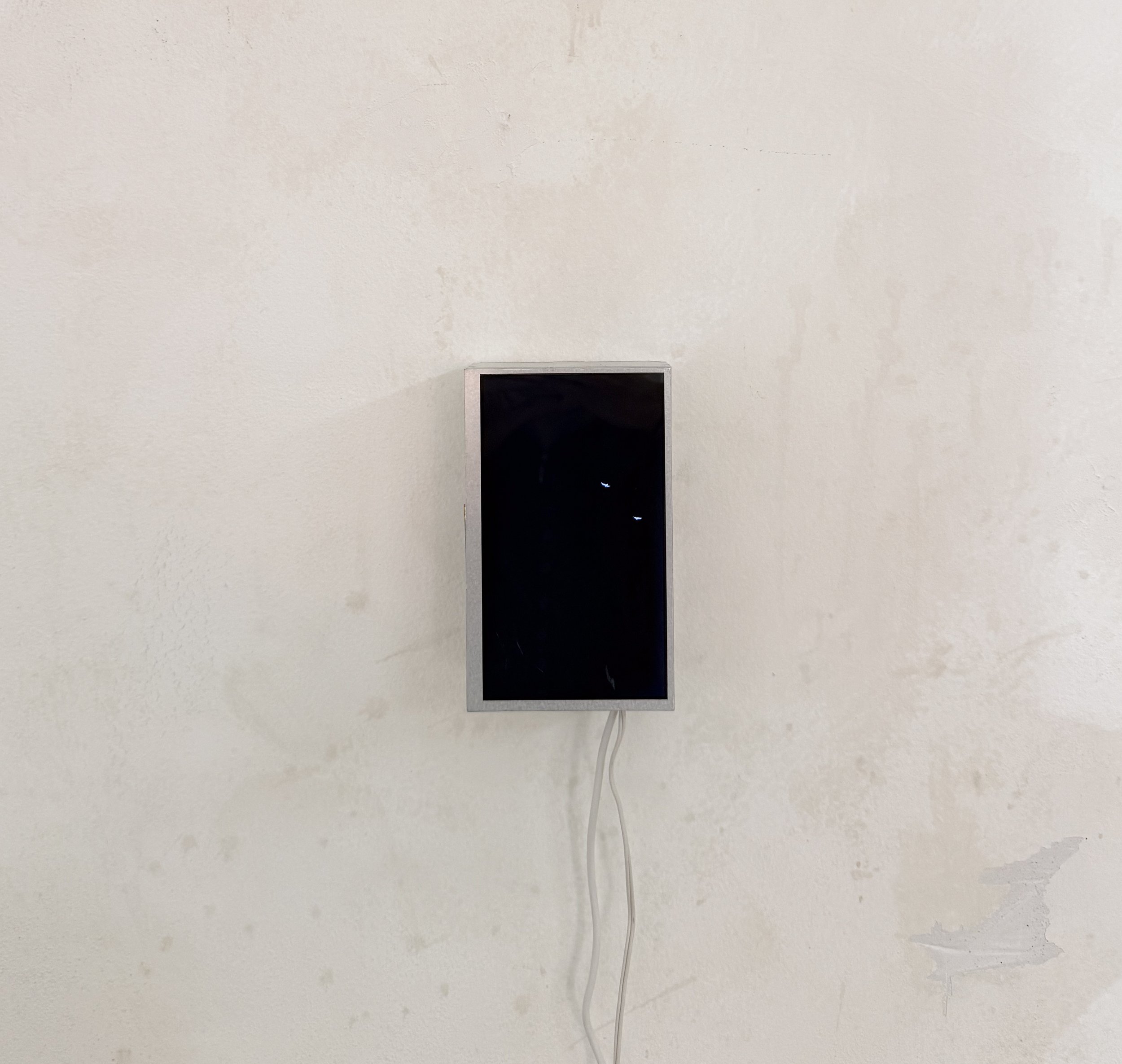
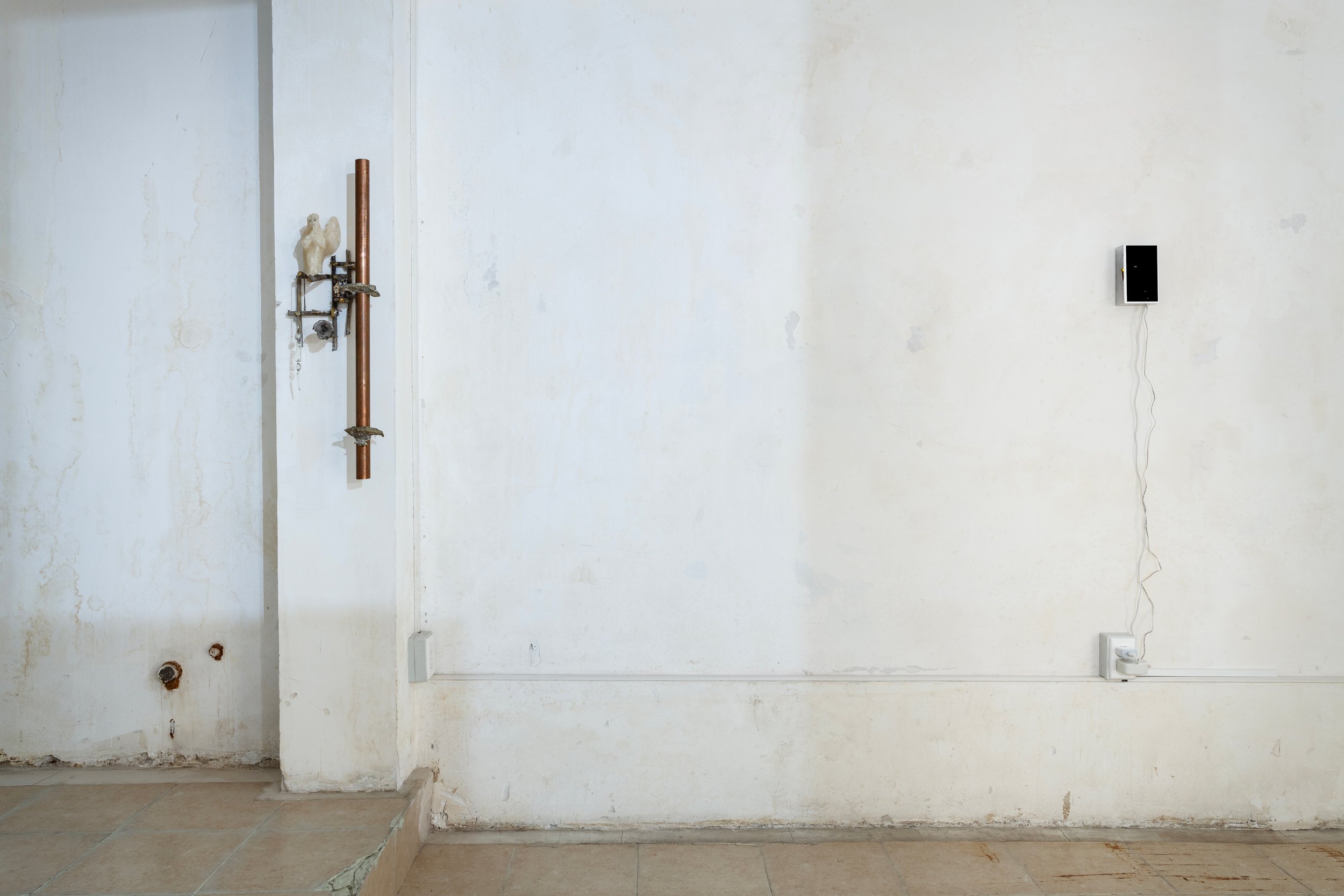
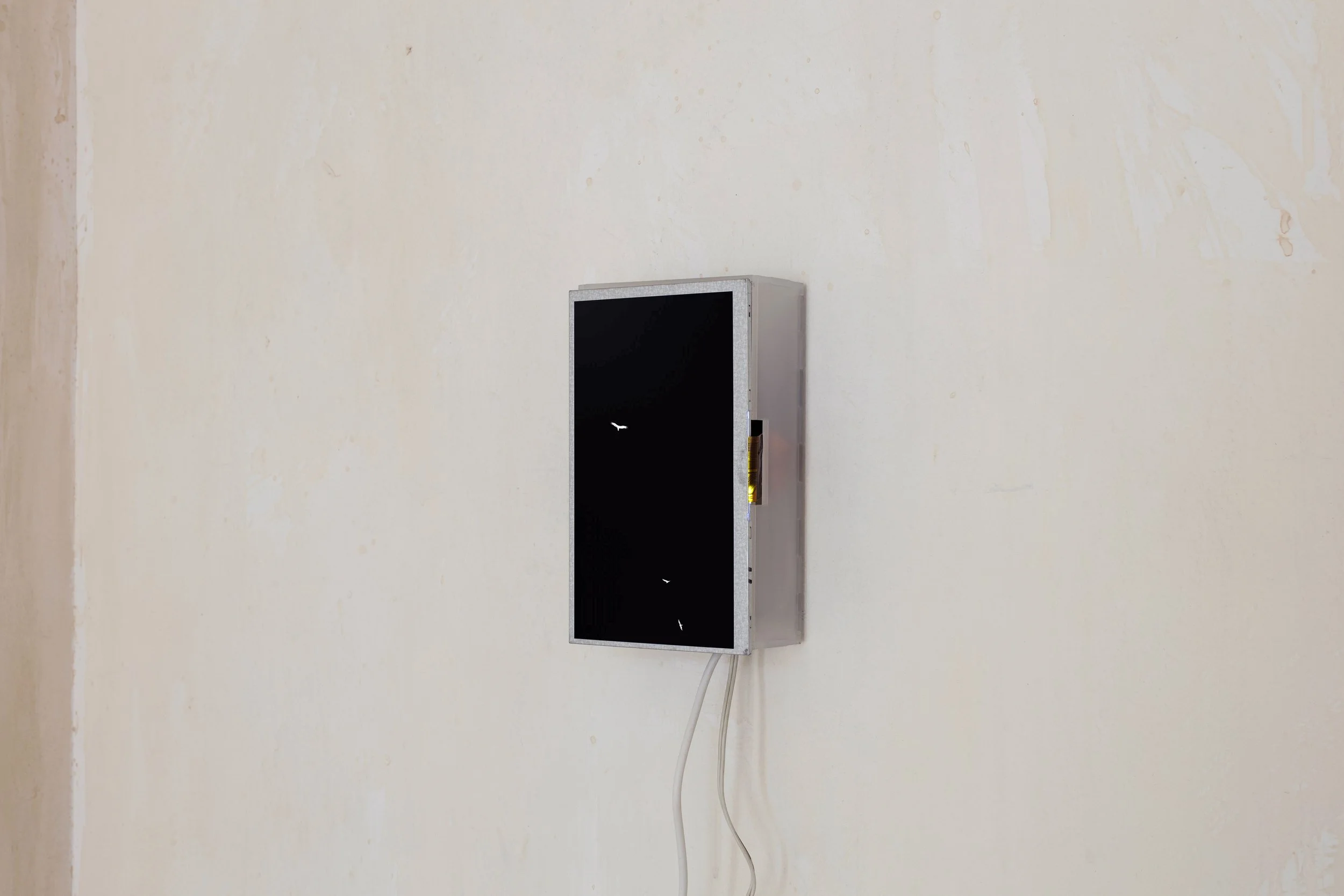
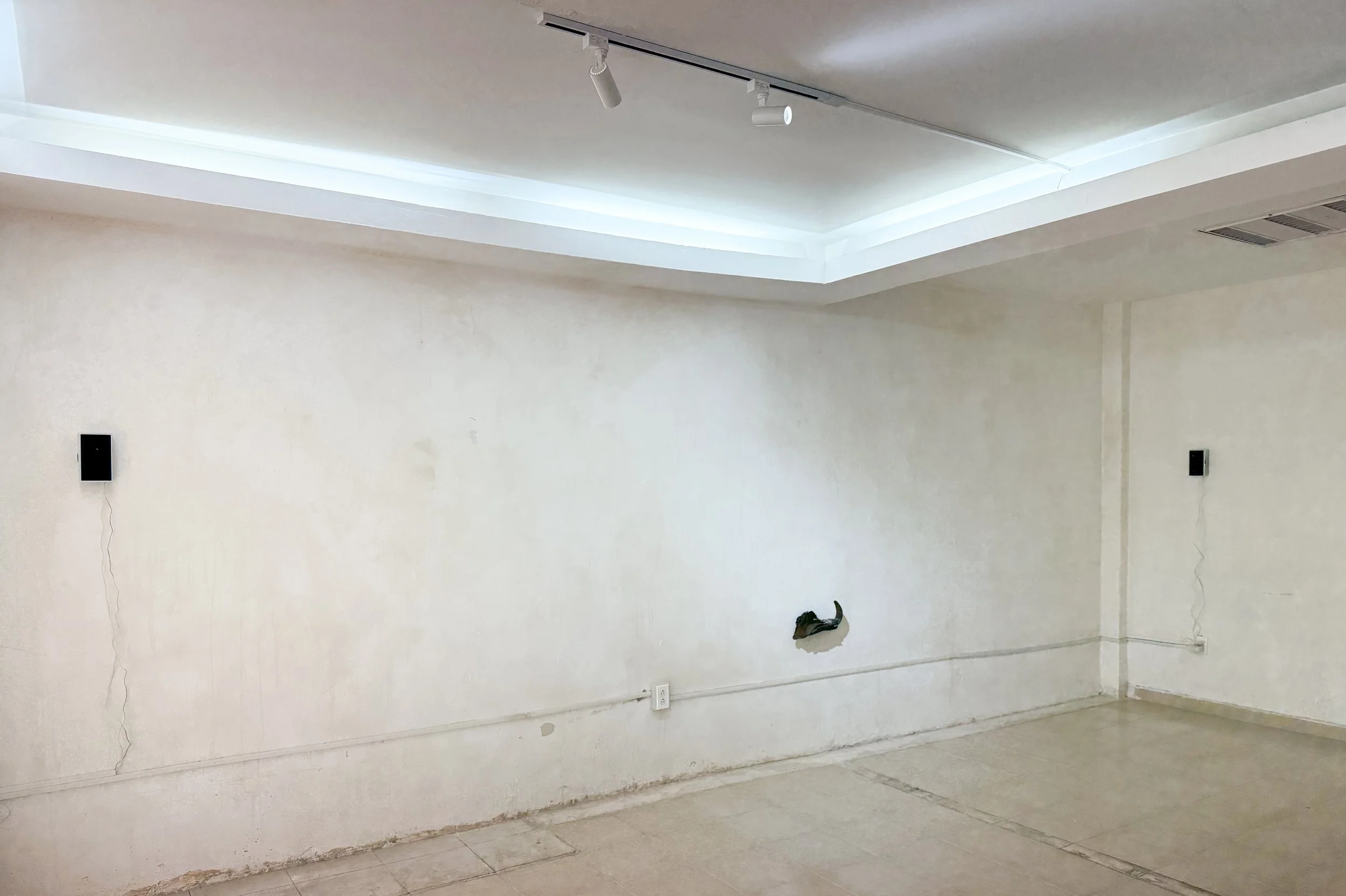
Installation view. Photos: Rubén Garay & Olga Krüssenberg
Miguel
LED-sign, text, acrylic glass, 64 x 16 x 7 cm, 2025
The text was presented in English on one side and in Spanish on the other side.
On Sunday I went to the market for the second time. Just like last time the market was full of people. More people this time even. I was tired and could barely look at things anymore; after all, I was in my fourth hour, sun cooking strong. I passed a stall with spoons, neatly arranged on a red cloth. I made eye contact with the seller, a man in his 60s who was sitting on a low wall behind the cloth, with two people in their 30s next to him. I guessed they were his children. He was my mother’s age, and I was his children’s age. The man was in the middle of eating and had a spoon in his mouth. His hand holding the spoon shook uncontrollably, jingling metal against enamel. The struggle between the man’s will and the hand’s will was a familiar scene. My mother suffers from likely the same illness that makes her hands shake more and more each year. Many times have I seen spoons tremble uncontrollably in her hands. My gaze was focused on that memory of her, and only when the mans eyes found mine did I realize I had been staring subconsciously. He looked ashamed. Embarrassed. Quickly putting down the spoon in his lap. As if I had just seen something he didn’t want me to see. And I felt ashamed too, because I had just witnessed something he didn’t want anyone to notice. Being exposed in his vulnerability. I moved on, and quickly realized I didn’t want to stay in the market much longer, suddenly longing to relax limbs on the bus. Soon after finding a seat, the bus found its way to inevitable traffic. I let my eyes rest on nothing in particular on the other side of the street. A red, scrolling line of text on an LED sign focused my gaze, and I tried momentarily to understand the words in a language I did not know, before quickly recalling my lethargy – letting the red diodes return to a blur. My thoughts found their way back to the man who sold spoons on the red cloth, I wished I had given the man a smile, and I suddenly missed my mother.
On Sunday I went to the market for the second time. Just like last time the market was full of people. More people this time even. I was tired and could barely look at things anymore; after all, I was in my fourth hour, sun cooking strong. I passed a stall with spoons, neatly arranged on a red cloth. I made eye contact with the seller, a man in his 60s who was sitting on a low wall behind the cloth, with two people in their 30s next to him. I guessed they were his children. He was my mother’s age, and I was his children’s age. The man was in the middle of eating and had a spoon in his mouth. His hand holding the spoon shook uncontrollably, jingling metal against enamel. The struggle between the man’s will and the hand’s will was a familiar scene. My mother suffers from likely the same illness that makes her hands shake more and more each year. Many times have I seen spoons tremble uncontrollably in her hands. My gaze was focused on that memory of her, and only when the mans eyes found mine did I realize I had been staring subconsciously. He looked ashamed. Embarrassed. Quickly putting down the spoon in his lap. As if I had just seen something he didn’t want me to see. And I felt ashamed too, because I had just witnessed something he didn’t want anyone to notice. Being exposed in his vulnerability. I moved on, and quickly realized I didn’t want to stay in the market much longer, suddenly longing to relax limbs on the bus. Soon after finding a seat, the bus found its way to inevitable traffic. I let my eyes rest on nothing in particular on the other side of the street. A red, scrolling line of text on an LED sign focused my gaze, and I tried momentarily to understand the words in a language I did not know, before quickly recalling my lethargy – letting the red diodes return to a blur. My thoughts found their way back to the man who sold spoons on the red cloth, I wished I had given the man a smile, and I suddenly missed my mother.
〰️
On Sunday I went to the market for the second time. Just like last time the market was full of people. More people this time even. I was tired and could barely look at things anymore; after all, I was in my fourth hour, sun cooking strong. I passed a stall with spoons, neatly arranged on a red cloth. I made eye contact with the seller, a man in his 60s who was sitting on a low wall behind the cloth, with two people in their 30s next to him. I guessed they were his children. He was my mother’s age, and I was his children’s age. The man was in the middle of eating and had a spoon in his mouth. His hand holding the spoon shook uncontrollably, jingling metal against enamel. The struggle between the man’s will and the hand’s will was a familiar scene. My mother suffers from likely the same illness that makes her hands shake more and more each year. Many times have I seen spoons tremble uncontrollably in her hands. My gaze was focused on that memory of her, and only when the mans eyes found mine did I realize I had been staring subconsciously. He looked ashamed. Embarrassed. Quickly putting down the spoon in his lap. As if I had just seen something he didn’t want me to see. And I felt ashamed too, because I had just witnessed something he didn’t want anyone to notice. Being exposed in his vulnerability. I moved on, and quickly realized I didn’t want to stay in the market much longer, suddenly longing to relax limbs on the bus. Soon after finding a seat, the bus found its way to inevitable traffic. I let my eyes rest on nothing in particular on the other side of the street. A red, scrolling line of text on an LED sign focused my gaze, and I tried momentarily to understand the words in a language I did not know, before quickly recalling my lethargy – letting the red diodes return to a blur. My thoughts found their way back to the man who sold spoons on the red cloth, I wished I had given the man a smile, and I suddenly missed my mother. 〰️
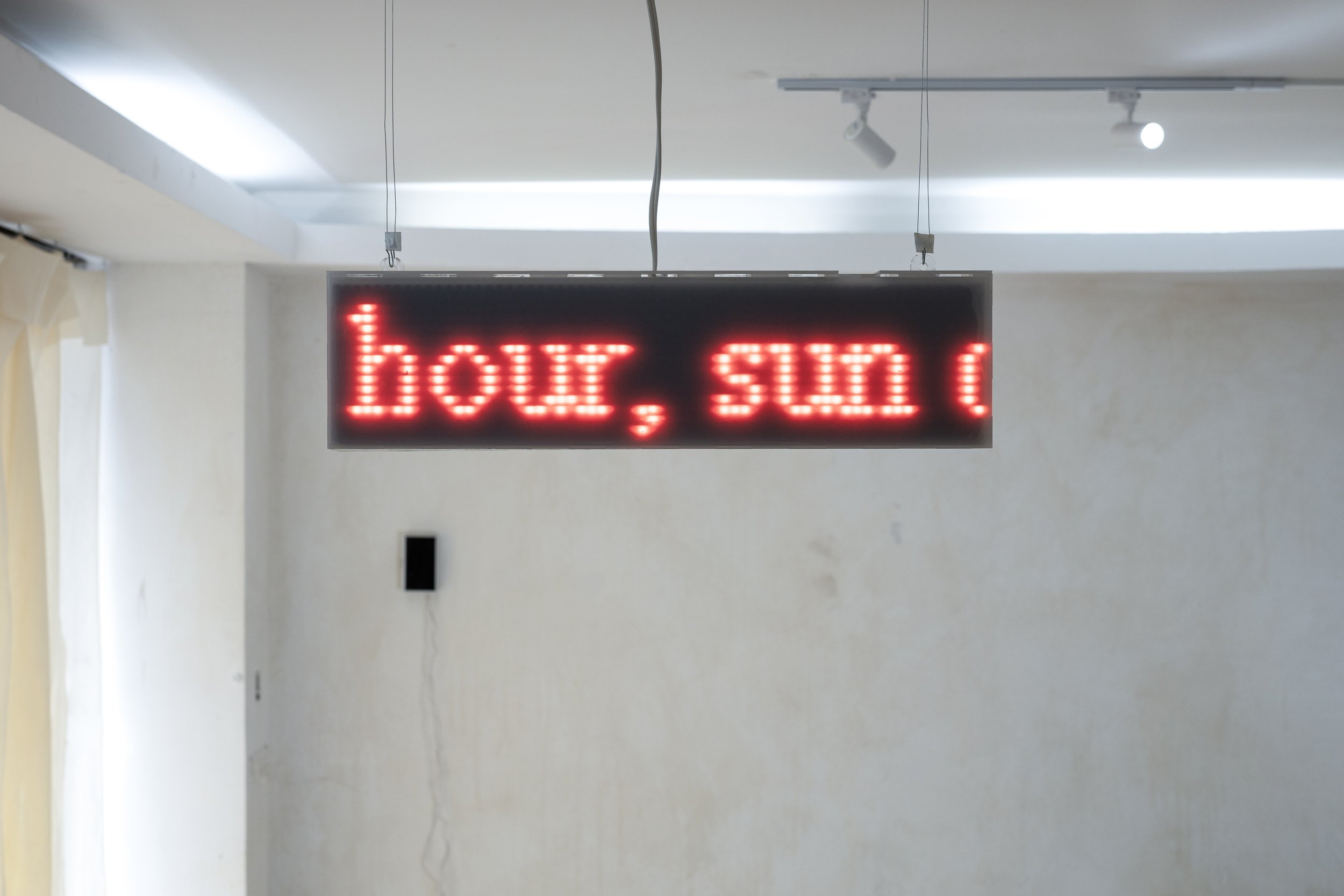
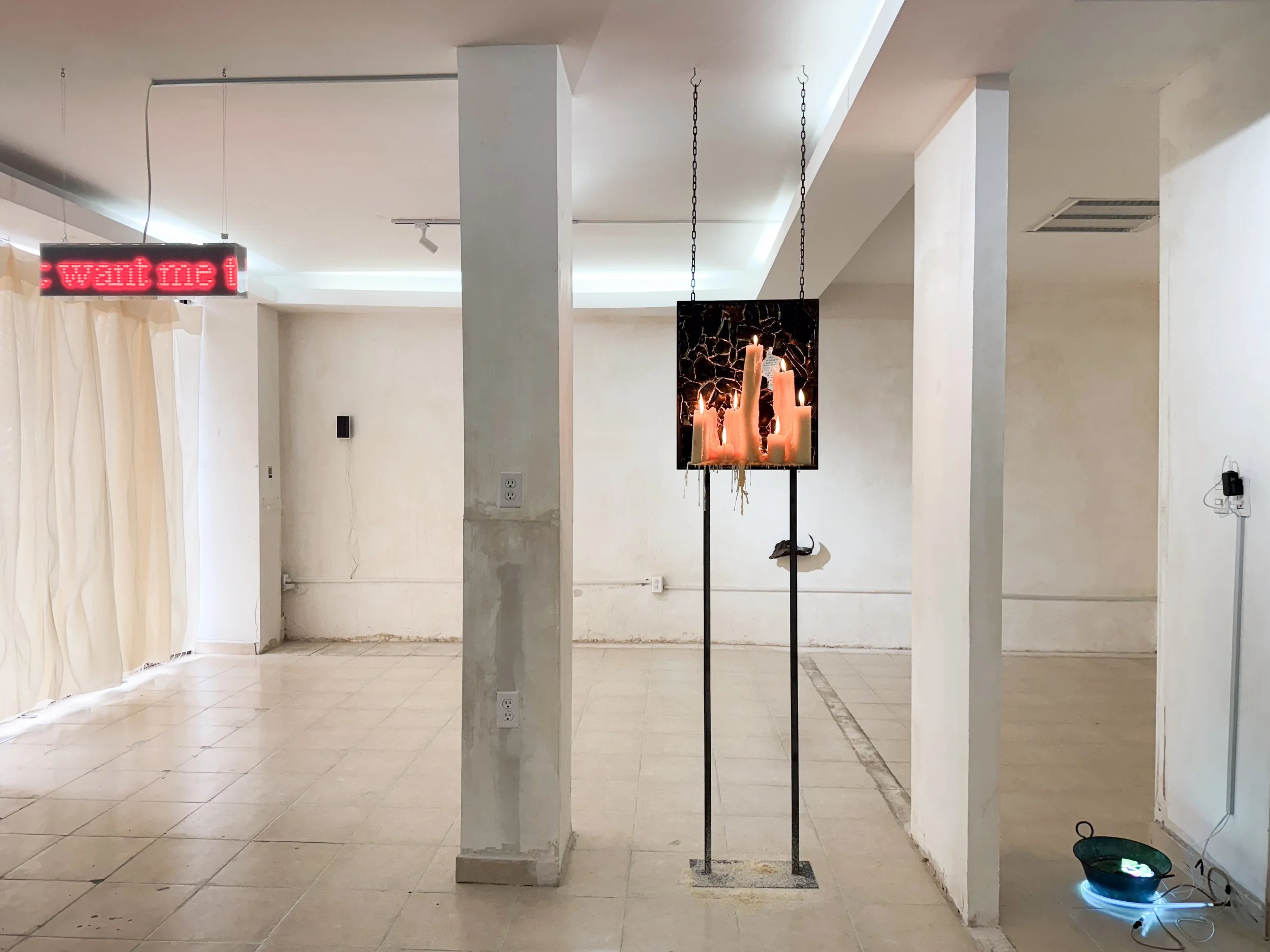
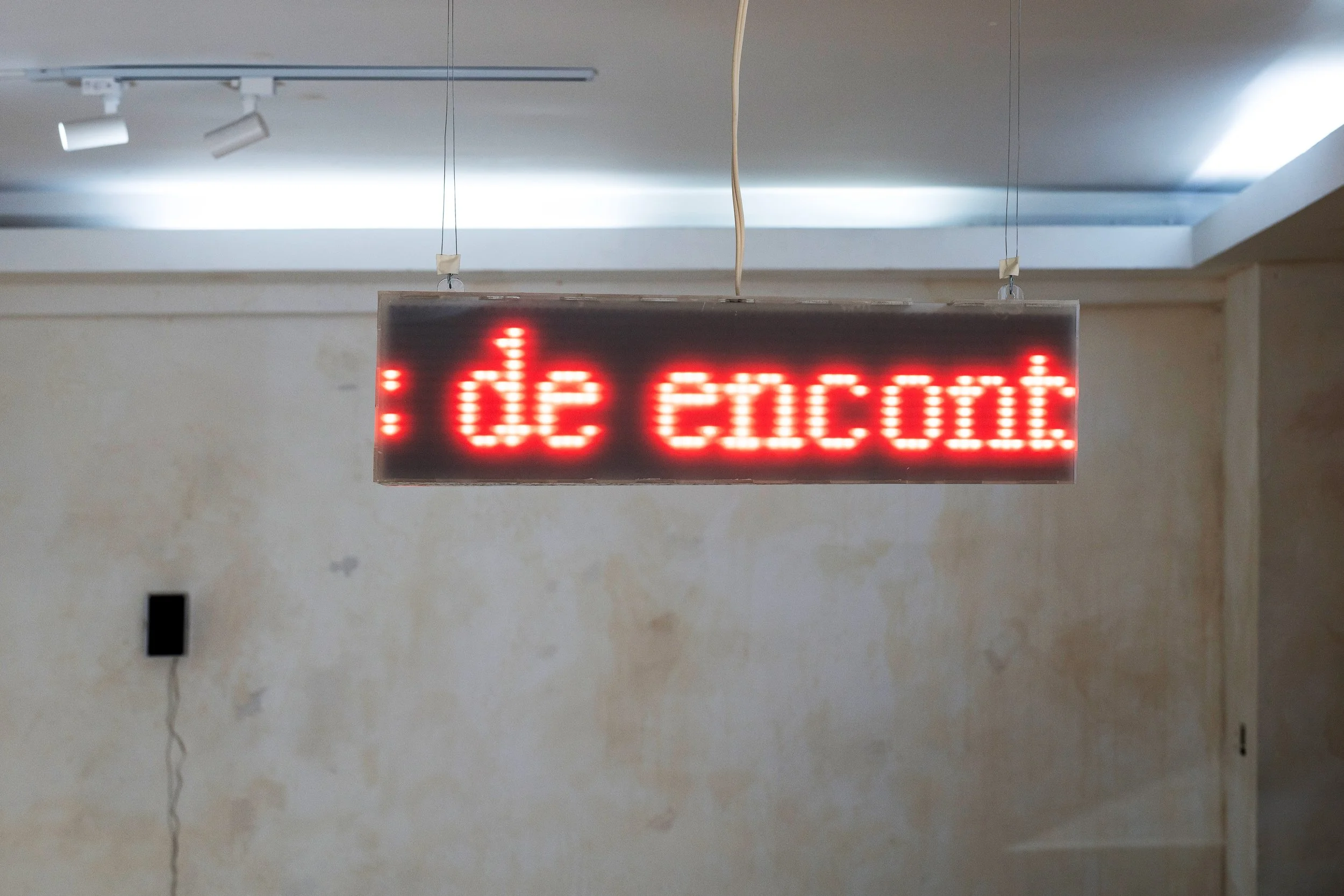
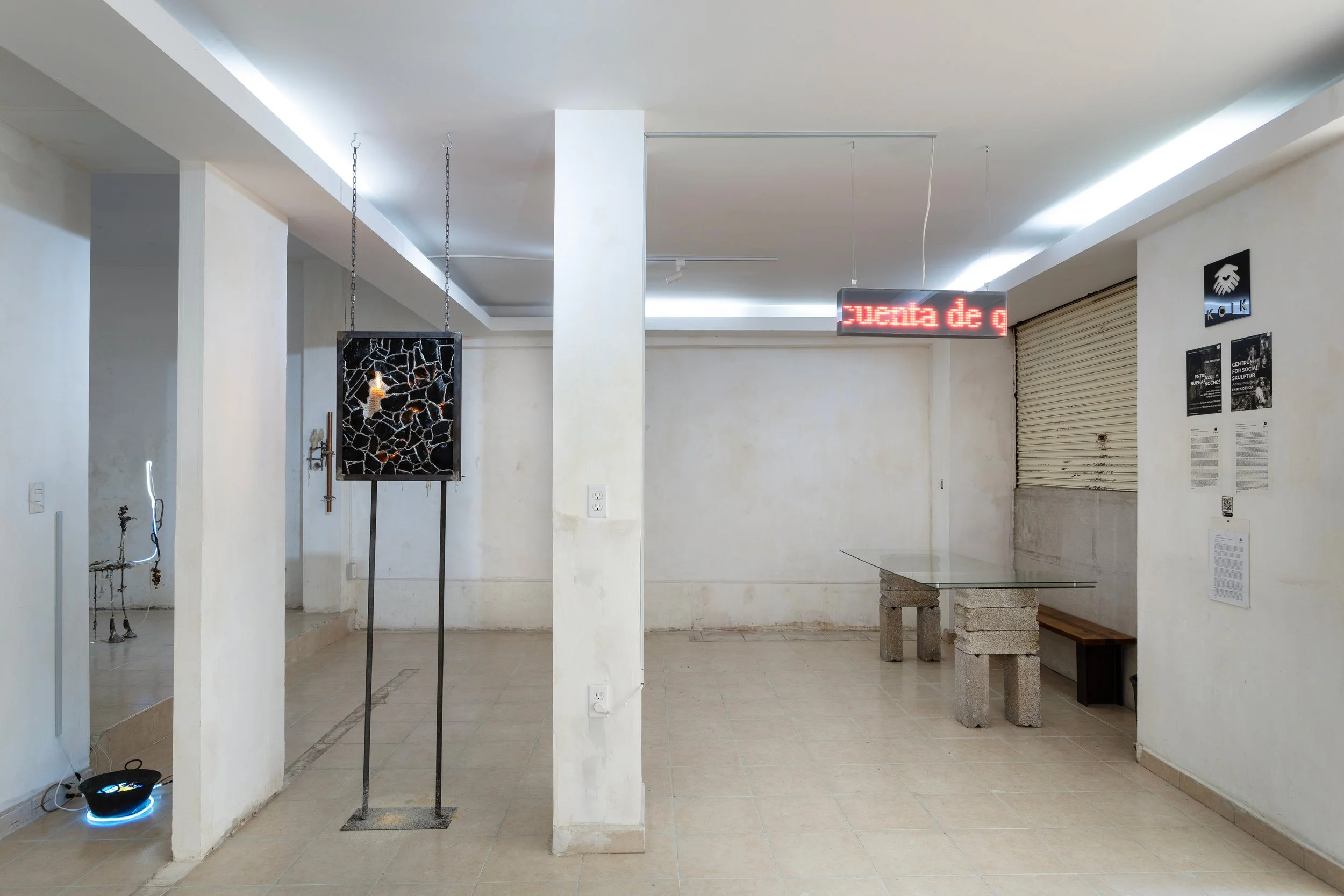
Installation view. Photos: Rubén Garay & Olga Krüssenberg
El domingo fui al mercado por segunda vez. Igual que la vez anterior, el mercado estaba lleno de gente. Incluso había más gente esta vez. Yo estaba cansada y casi ya no podía mirar las cosas; después de todo, llevaba cuatro horas ahí, con el sol pegando fuerte. Pasé por un puesto con cucharas, ordenadas cuidadosamente sobre un paño rojo. Crucé miradas con el vendedor, un hombre de unos sesenta años que estaba sentado en un muro bajo detrás del paño, con dos personas de unos treinta a su lado. Supuse que eran sus hijos. Él tenía la edad de mi madre, y yo la edad de sus hijos. El hombre estaba en medio de su comida y tenía una cuchara en la boca. Su mano, que sostenía la cuchara, temblaba incontrolablemente, haciendo sonar el metal contra el esmalte. La lucha entre la voluntad del hombre y la voluntad de la mano era una escena familiar. Mi madre sufre probablemente de la misma enfermedad que hace que sus manos tiemblen más y más cada año. Muchas veces he visto cucharas temblar incontrolablemente en sus manos. Mi mirada se fijó en ese recuerdo de ella, y sólo cuando los ojos del hombre encontraron los míos me di cuenta de que lo había estado mirando de forma inconsciente. Él se veía avergonzado. Incómodo. Rápidamente puso la cuchara en su regazo. Como si yo acabara de ver algo que no quería que yo viera. Y yo también me sentí avergonzada, porque acababa de presenciar algo que él no quería que nadie notara. Estar expuesto en su vulnerabilidad. Seguí adelante, y pronto me di cuenta de que no quería quedarme mucho más en el mercado, de repente deseando relajar mis extremidades en el autobús. Poco después de encontrar un asiento, el autobús cayó en el inevitable tráfico. Dejé que mis ojos descansaran en nada en particular al otro lado de la calle. Una línea roja de texto desplazándose en un letrero de LED enfocó mi mirada, e intenté por un momento entender las palabras en un idioma que no conocía, antes de recordar rápidamente mi letargo y dejar que los diodos rojos volvieran a convertirse en un borrón. Mis pensamientos regresaron al hombre que vendía cucharas sobre el paño rojo. Ojalá le hubiera dado una sonrisa, y de repente extrañé a mi madre.
El domingo fui al mercado por segunda vez. Igual que la vez anterior, el mercado estaba lleno de gente. Incluso había más gente esta vez. Yo estaba cansada y casi ya no podía mirar las cosas; después de todo, llevaba cuatro horas ahí, con el sol pegando fuerte. Pasé por un puesto con cucharas, ordenadas cuidadosamente sobre un paño rojo. Crucé miradas con el vendedor, un hombre de unos sesenta años que estaba sentado en un muro bajo detrás del paño, con dos personas de unos treinta a su lado. Supuse que eran sus hijos. Él tenía la edad de mi madre, y yo la edad de sus hijos. El hombre estaba en medio de su comida y tenía una cuchara en la boca. Su mano, que sostenía la cuchara, temblaba incontrolablemente, haciendo sonar el metal contra el esmalte. La lucha entre la voluntad del hombre y la voluntad de la mano era una escena familiar. Mi madre sufre probablemente de la misma enfermedad que hace que sus manos tiemblen más y más cada año. Muchas veces he visto cucharas temblar incontrolablemente en sus manos. Mi mirada se fijó en ese recuerdo de ella, y sólo cuando los ojos del hombre encontraron los míos me di cuenta de que lo había estado mirando de forma inconsciente. Él se veía avergonzado. Incómodo. Rápidamente puso la cuchara en su regazo. Como si yo acabara de ver algo que no quería que yo viera. Y yo también me sentí avergonzada, porque acababa de presenciar algo que él no quería que nadie notara. Estar expuesto en su vulnerabilidad. Seguí adelante, y pronto me di cuenta de que no quería quedarme mucho más en el mercado, de repente deseando relajar mis extremidades en el autobús. Poco después de encontrar un asiento, el autobús cayó en el inevitable tráfico. Dejé que mis ojos descansaran en nada en particular al otro lado de la calle. Una línea roja de texto desplazándose en un letrero de LED enfocó mi mirada, e intenté por un momento entender las palabras en un idioma que no conocía, antes de recordar rápidamente mi letargo y dejar que los diodos rojos volvieran a convertirse en un borrón. Mis pensamientos regresaron al hombre que vendía cucharas sobre el paño rojo. Ojalá le hubiera dado una sonrisa, y de repente extrañé a mi madre.
-
![]()
Installation view
-
![]()
Rasmus Richter
-
![]()
Andy Allen-Olivar
-
![]()
Rasmus Richter
-
![]()
Tuva Björk
-
![]()
Installation view
-
![]()
Andy Allen-Olivar
-
![]()
Rasmus Richter